


Sofa Material That Is Durable: What Actually Lasts
Most "durable" sofa claims are just a flattering adjective standing next to a price tag. Real durability is measurable: rub counts, fibre percentages, foam density in kilos per cubic metre, how a fabric looks after five years of the same person landing in the same spot with the same laptop.
So here's the honest version.
The short answer
Dense high-pile fabrics, wool blends, full-grain leather and performance polyester survive daily life best. Loose weaves, thin cotton and bonded leather don't.
In practice, the winners look like this:
- Dense corduroy (cut pile, high rub count): hides scuffs, crumbs and cat enthusiasm instead of displaying them. Our TEDDY Sofa is upholstered in exactly this kind of fabric. Not a coincidence.
- Wool and wool blends: springy, naturally dirt-resistant, ages into something better looking.
- Full-grain leather: expensive, heavy, close to immortal if you keep it out of direct sun.
- Performance polyester and polypropylene: dull on paper, excellent against stains and abrasion.
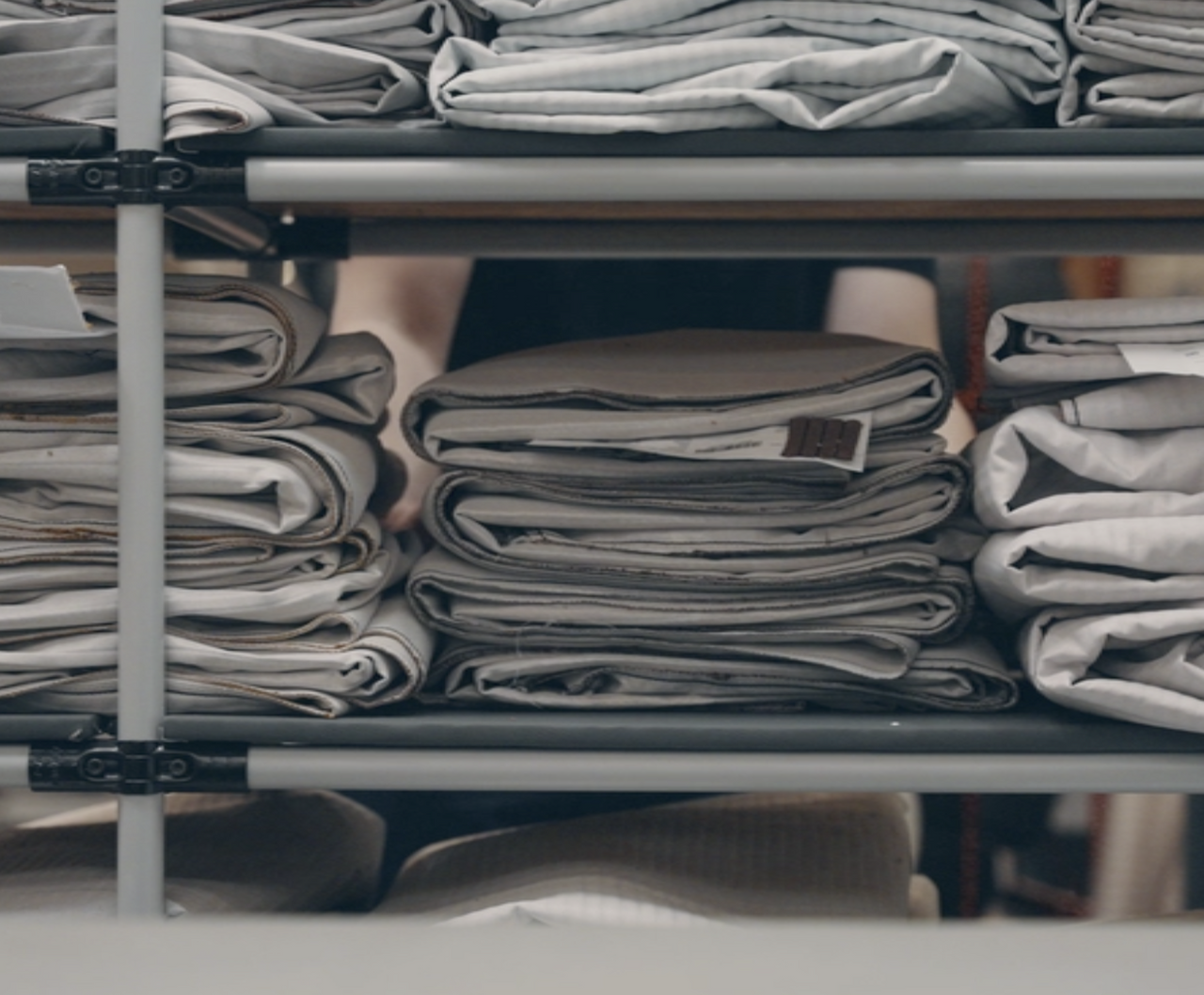
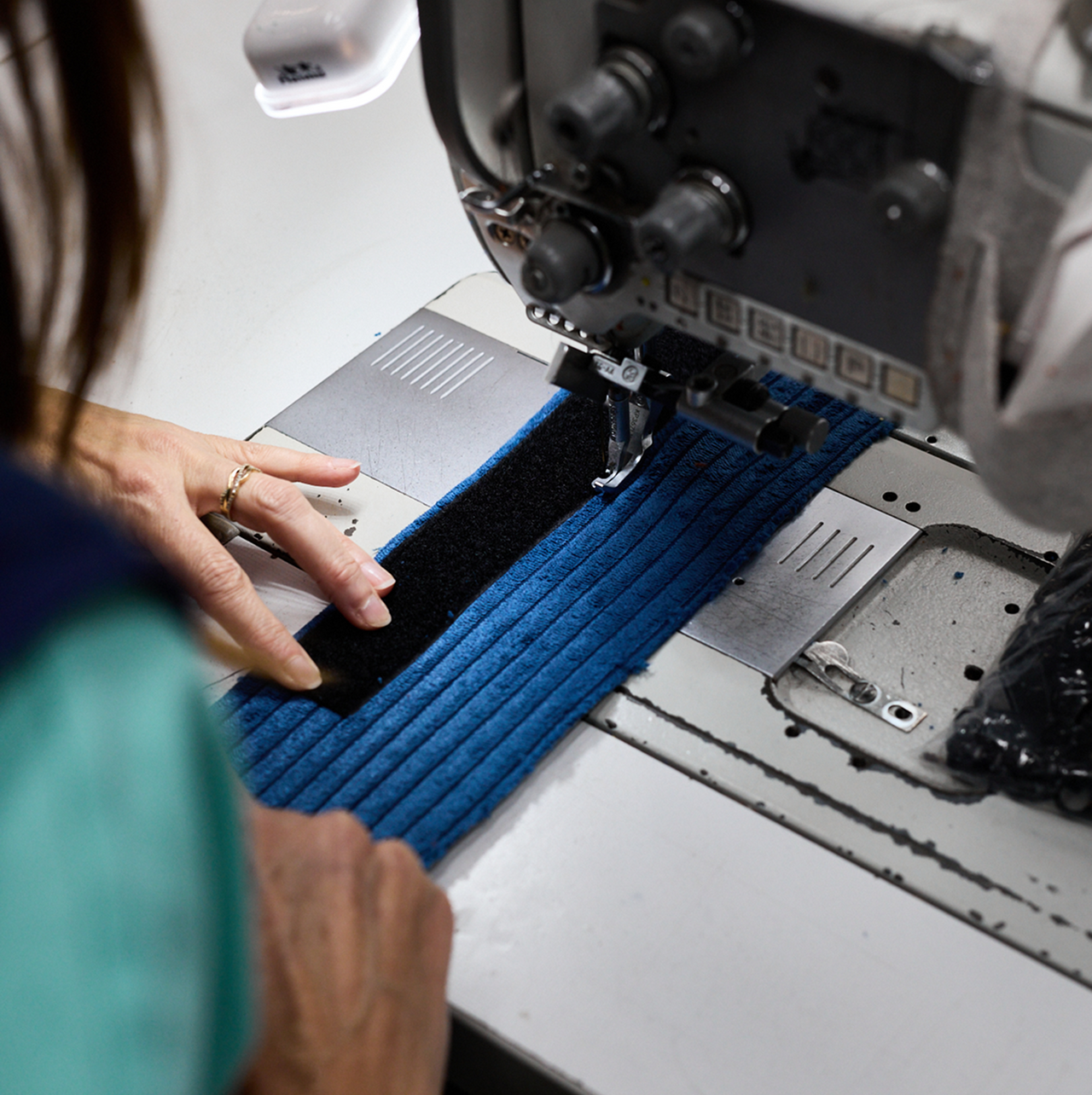
And the ones to walk past: bonded leather (it peels, always), thin 100% cotton, loose slubby linen on a family sofa and any bouclé with big loops if you live with a cat who has opinions.
What "durable" really means on a sofa
Durability is four separate properties bundled into one word. Separate them and shopping gets much easier.
1. Abrasion resistance
How much rubbing the fabric takes before it wears through. Measured in Martindale cycles (Europe) or double rubs (US, Wyzenbeek). This is the number brands quote when they have a good one.
Reads: Methods used in abrasion testing, by Camirafabrics (PDF)
2. Pilling
Those little fuzzy balls. A fabric can have a huge rub count and still pill if the fibres are short and loosely spun. Graded 1 to 5, where 5 means no pilling.
3. Colourfastness
Resistance to fading, mostly from sunlight. If your sofa sits in a south-facing window, this matters more than abrasion. A bleached stripe across one arm ends a sofa's life faster than any tear.
4. Shape retention
How it looks after five years of the same seat taking the same body. That's foam and suspension, not fabric.
Which leads to the uncomfortable truth: the frame and the foam usually fail before the fabric does. Sagging seats, creaking joints, a back cushion gone flat on one side. Fabric choice is half the story at best, so read the rest of the spec too.
Corduroy: the ribbed one that hides its wear

Corduroy is our home turf, so let's be straight about both sides. Its superpower is camouflage. Cut pile means thousands of tiny fibre ends standing upright in ribs (called wales), so light scatters instead of bouncing off one flat plane. Scuffs, crumbs, dog hair, the ghost of last week's crisps: all less visible than on a flat weave, where every mark sits on the surface and announces itself.
The trade-off: pile flattens. In the seat where everyone lands, the wales get pressed down and go slightly shiny. It reads as wear, but the fabric is usually fine. Brush along the wale with a soft brush or a vacuum brush head and the pile stands back up. Do it monthly and the sofa ages evenly. If you want the full background on the weave, we wrote a whole piece on what corduroy actually is.
For hard-use homes, TEDDY Sofa and the roomier TEDDY Plus in darker shades (Charcoal, Moss, Rust, Slate) are the most forgiving. Not because dark fabric is tougher, but because deeper tones plus ribbed texture hide the everyday mess that makes a pale flat weave look tired.
Other Sofa Materials
Full-grain leather

Best long-term bet if the budget stretches. Abrasion resistance is excellent, spills wipe off, it develops a patina instead of looking worn out. Downsides: claws leave permanent punctures, it needs conditioning, it's cold in winter and it fades in direct sun.
Bonded leather

Avoid. It's leather dust glued to a backing with a plastic top coat. That coat cracks and peels, usually in year two or three, and it can't be repaired. Any listing that says "leather look" or "PU leather" without a grain description deserves suspicion.
Wool and wool blends

Excellent all-rounder. The fibre crimps back into shape, resists dirt, is hard to set alight and ages well. Wool blended with 20 to 30% synthetic usually beats pure wool on rub count and pilling. Downsides: cost, and it can felt if you scrub it wet.
Linen

Strong fibre, weak sofa fabric in most cases. Linen is genuinely tough per thread, but the loose slubby weaves that make it look good also snag, and it creases the second you sit down. It absorbs water stains in rings, too. Great in a photo, high-maintenance in a living room with children.
Cotton

Depends entirely on construction. A dense cotton corduroy or canvas is solid. A thin plain-weave cotton wears at the arms fast and fades visibly. Cotton also stains readily because the fibre drinks liquid.
Microfibre
Tightly packed ultra-fine polyester. Very good against claws (nothing to hook into), easy to wipe, budget-friendly. It attracts dust and can go shiny in the seat that gets rubbed most.
Polyester
The quiet workhorse. High abrasion resistance, good colourfastness, dries fast, cheap to produce. Cheap polyester can feel plasticky and pill. Good polyester (or a poly blend in a dense weave) outlives most natural fibres on a family sofa.
Polypropylene (olefin)
Wins on stains, no argument. The colour goes in while the fibre is being made, so aggressive cleaning doesn't strip it, and it barely absorbs water. Loses on feel: often a bit slick, and it's heat sensitive.
If you want the longer side-by-side comparison, our guide to the best sofa fabrics and materials goes deeper on each one.
Match the material to your actual household
Pick for the life you have, not the one in the styling photo.
- Dogs and cats: skip loop weaves and bouclé. Claws hook loops and pull them into runs. Go tight pile (corduroy, microfibre) or leather if the animal isn't a climber. Our breakdown of pet-friendly sofa fabrics covers the details.
- Toddlers: removable washable covers beat every other feature. Mid-tones over pale or jet black. Both extremes show everything, one in crumbs and one in dust.
- Renters who move often: modular pieces. They fit through awkward doorways, survive being reassembled and adapt to the next flat's strange layout.
- Sun-flooded rooms: colourfastness beats everything. Solution-dyed synthetics and deeper mid-tones hold up. Brightly dyed naturals go patchy.
- Open-plan kitchen and living rooms: think about smells as much as stains. Pile fabrics hold odour, so removable covers earn their keep.
This is where spare covers change the maths. With TEDDY, one ruined seat cover is a replacement cover, not a replacement sofa. Damage becomes a laundry problem instead of a landfill problem.
Modularity is a durability feature nobody counts

Here's the angle that never makes it onto a spec sheet: a sofa you can reconfigure spreads wear across pieces instead of destroying one favourite seat.
Every sofa has a hot seat. The one nearest the TV, the lamp, the charging cable. On a fixed three-seater, that cushion takes maybe 70% of all sitting hours and it shows, permanently. On a modular setup you rotate the hot seat out every few months and the whole sofa ages at one speed.
Construction matters too. TEDDY pieces join with metal connector bars, so the joints stay tight through repeated assembly. Glued and stapled frames loosen the moment you start moving them, which is why plenty of "solid" sofas start creaking after one house move. TEDDY Corner Open and Corner Closed can swap sides when you rearrange, and the fold-out bed function means the piece pulling guest duty can be rotated out of daily service when it needs a break.
How to make any material last longer
Maintenance buys you years. None of it is glamorous.
- Rotate and flip cushions monthly. The single highest-impact habit. Foam recovers if you let it.
- Vacuum with a brush head. Grit works like sandpaper between the fibres. Weekly on pile fabrics.
- Blot, never rub. Rubbing pushes the stain into the backing and breaks the pile.
- Keep it off radiators and out of direct midday sun. Heat dries leather, UV fades everything.
- Wash covers cool (30°C max), no tumble drying, and put them back on slightly damp so they fit properly.
- Brush corduroy along the wale, not across it, to lift flattened pile.
- Deal with spills the same day. Our guide on how to clean a couch has the method by fabric type.
And when you're bored rather than the sofa being worn out: new pillows and a spare cover set are by far the cheapest reset. A sofa that feels new doesn't get replaced.
Material composition, decoded: what the spec sheet is telling you

This is the part sellers hope you skim. Learn six numbers and you can judge almost any sofa listing in a minute.
Fibre percentages
The label tells you behaviour, not quality. 100% polyester means high abrasion resistance, good colourfastness, low absorbency, some static. 100% cotton means breathable and pleasant, but absorbent and quick to fade. Poly-cotton blends (say 60/40 or 70/30) usually give you the feel of cotton with the wear resistance of polyester, which is why blends often outlast pure naturals in real homes. Wool blends with 10 to 30% nylon or polyester gain a lot of abrasion resistance for very little loss of character.
Pile versus backing
Pile fabrics (corduroy, velvet, chenille) are built in two layers: the pile you touch and the backing that holds it. A great pile on a weak backing sheds. Look for wording about a woven backing rather than a knitted one, and note that a knit-backed pile stretches over cushions, which reads as sagging even when the foam is fine.
Weave density and GSM
GSM means grams per square metre, so fabric weight. Upholstery fabric generally starts around 300 GSM. Below roughly 250 GSM you're in curtain territory and it won't survive a sofa. 400 to 700 GSM is the comfortable zone for pile upholstery. Density matters as much as weight: hold the fabric up to the light, and if you can see through it, claws and knees will find their way through too.
Martindale and Wyzenbeek rub counts
Two ways of measuring abrasion. Rough thresholds:
- Under 10,000 Martindale: decorative only. Not a sofa you sit on daily.
- 15,000 to 20,000: fine for general domestic use.
- 25,000 to 40,000+: heavy domestic and light commercial. This is what you want for a family sofa, pets or a sofa that doubles as a bed.
- Wyzenbeek equivalents: 15,000 double rubs is heavy domestic, 30,000+ is contract grade. The two tests don't convert cleanly, so don't let anyone tell you 40,000 Martindale equals 40,000 double rubs.
Lightfastness and pilling grades
Lightfastness runs 1 to 8 (Blue Wool scale). Aim for 5 or higher if the sofa gets real daylight, 6+ for a sun trap. Pilling is graded 1 to 5, where 4 to 5 means it stays smooth. A high rub count with a pilling grade of 2 tells you the fabric will survive but look fuzzy doing it.
Property |
Standard |
|---|---|
Apparent density (kg/m³) |
ISO 845 |
Indentation hardness (firmness) |
ISO 2439 |
Compression stress-strain |
ISO 3386-1 |
Fatigue by constant-load pounding (the sag test) |
ISO 3385 |
US umbrella standard covering all of the above |
ASTM D3574 |
Foam density
Measured in kg/m³. This is the number that decides whether your seat still holds a shape in year five. Under 25 kg/m³ collapses fast. 30 to 35 kg/m³ is solid for seat cushions. High-resilience (HR) foam at 35 kg/m³ and up, or foam with a feather or fibre wrap, gives you softness without the sag. Back cushions can be lighter, they carry less load.
Suspension and frame
Under the foam sits either elastic webbing or springs. Webbing is lighter and cheaper and slowly stretches. Serpentine (zig-zag) springs hold longer. Eight-way hand-tied springs are the traditional benchmark and rarely appear below a high price point. For frames, kiln-dried hardwood or solid pine with proper joints beats particleboard every time. If a listing says "engineered wood" with no further detail, that's chipboard with a marketing degree.
Fabric labels and what they mean in practice
Now the shopping rules. Same numbers, translated into decisions.
Cotton corduroy versus polyester corduroy
A high-GSM 100% cotton corduroy feels warmer and matte, breathes well and softens over years. It also drinks spills faster and fades sooner in sunlight. A polyester corduroy resists stains and fading better, keeps its colour saturation and usually posts a higher rub count, but can feel slightly slicker and builds static in dry winter air. Blends land in the middle and are, honestly, the sensible answer for most homes.
Why blends often win
Natural fibres bring feel and breathability. Synthetics bring abrasion resistance, colourfastness and dimensional stability (it doesn't stretch out of shape). Combine them and each covers the other's weakness. That's why a 70% cotton / 30% polyester upholstery fabric frequently outlasts a pure cotton one in the same weave.
What "performance fabric" actually means
Two different things, and the difference matters. Either the fabric is inherently stain resistant (solution-dyed, low-absorbency fibres like polypropylene, where the resistance is built into the fibre and never washes out), or it has a topical finish: a coating applied to the surface. Coatings work well at first and degrade with cleaning, washing and rubbing, often noticeably within two to five years depending on use. "Easy clean" usually means the second kind. Useful, just not permanent.
Specs sellers quietly leave out
- Foam density. If it's missing, assume it's low.
- Rub count. Nobody hides a good number.
- Lightfastness. Almost never published on consumer listings. Ask.
- Frame material specifics. "Solid wood" with no species or joinery detail is a hint.
- Whether covers are genuinely removable or just look like it, and whether spares are sold separately.
One more practical note: get the size right, because a sofa that doesn't fit the room gets replaced long before it wears out. Our guide to standard sofa dimensions is worth five minutes with a tape measure.
FAQ: durable sofa materials
Is corduroy durable?
Yes, when it's a dense cut pile with a woven backing and a rub count above roughly 20,000 Martindale. The pile hides wear better than flat weaves, and flattening in high-use seats is usually cosmetic and brushable rather than actual damage.
What is the most durable sofa fabric for dogs?
Tight-pile microfibre, dense corduroy or a high-rub-count polyester. All three give claws nothing to hook into. Skip loop weaves and bouclé entirely, and choose removable covers so muddy paws are a wash cycle rather than a crisis.
Is leather more durable than fabric?
Full-grain leather generally outlasts fabric, sometimes by decades. But it's less forgiving of specific damage: a claw puncture or a deep scratch is permanent, whereas a fabric cover can be washed or swapped. Bonded and corrected-grain leather are not more durable than good fabric.
What rub count do I need?
15,000 Martindale is acceptable for a lightly used sofa. 25,000 to 40,000+ is what you want for a main family sofa, pets or a sofa bed. Under 10,000 belongs on a decorative chair nobody sits in.
Does colour affect perceived durability?
Hugely. Mid to deep tones (charcoal, moss, rust, slate) hide crumbs, marks and fading far better than pale cream or pure black. The fabric wears at the same rate, it just doesn't broadcast it.
Can you replace just one sofa cover?
On modular sofas with removable covers, yes. One seat or one arm cover can be swapped without touching the rest, which is the biggest single reason these sofas survive families. Check spare covers are available before you buy, not after.
How long should a good sofa last?
Seven to ten years for a mid-range sofa, fifteen to twenty-five for one with a hardwood frame, high-density foam and replaceable covers. Cushion rotation and same-day spill cleaning move that number more than most people expect.


