


What Is Corduroy Sofa Fabric? A guide by professionals
Corduroy is the fabric you can identify with your eyes closed. Run a hand across it and you feel the ridges, those soft parallel lines that make a sofa look like it has a texture instead of just a colour.
The short answer
Corduroy is essentially woven fabric with raised parallel ridges running down its length. Those ridges are called wales, and they are made from an extra set of threads (the pile) that get woven in, cut open and brushed up so they stand proud of the base cloth.

The number of wales per inch decides how the fabric reads. Many thin ridges look fine and shirt-like. Few fat ridges look chunky and sculptural. Same fabric family, completely different personality.
What corduroy fabric is made of
Classic corduroy is mad of cotton.
That's the honest answer to what material corduroy is: cotton pile on a cotton base, which is why vintage corduroy trousers feel so soft and fade so beautifully.
Modern corduroy, especially the kind used for furniture, is usually a blend.
Polyester or viscose gets mixed into the yarn, and not for cost-cutting reasons alone. Here's what each part actually does:
- Cotton gives softness, breathability and that dry matte feel.
- Polyester adds abrasion resistance and stops the pile from crushing permanently. It also holds colour far better in sunlight.
- Viscose adds sheen, so the ridges catch light and the colour looks deeper.
For a sofa this matters more than it does for a shirt. A sofa gets sat on thousands of times a year in the same three spots. Pure cotton pile flattens and shades faster, pills more under friction and fades where the afternoon sun lands. Upholstery-grade corduroy is engineered for that abuse, which is why it's woven denser and tested for rub cycles in a way clothing fabric never is.
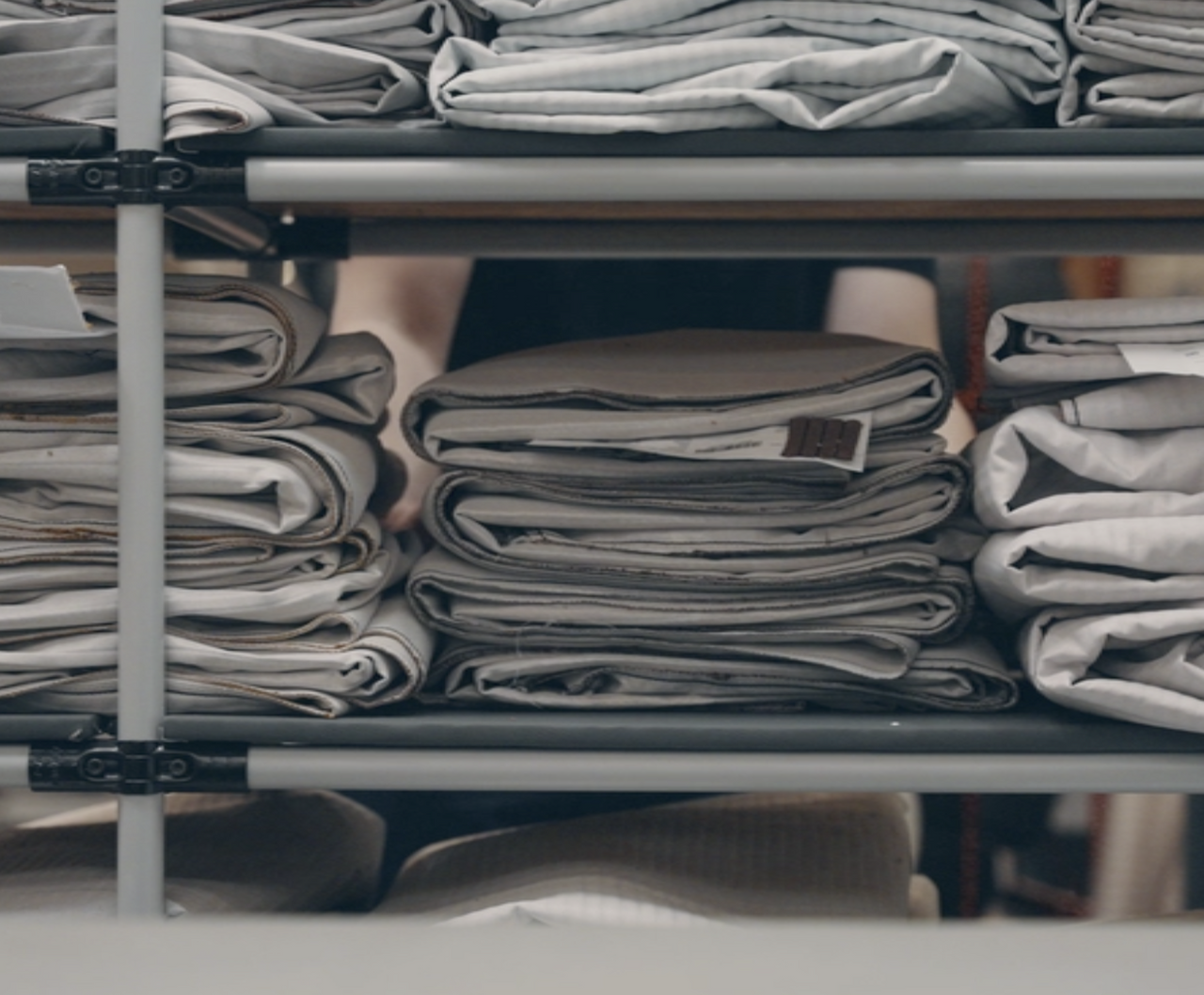
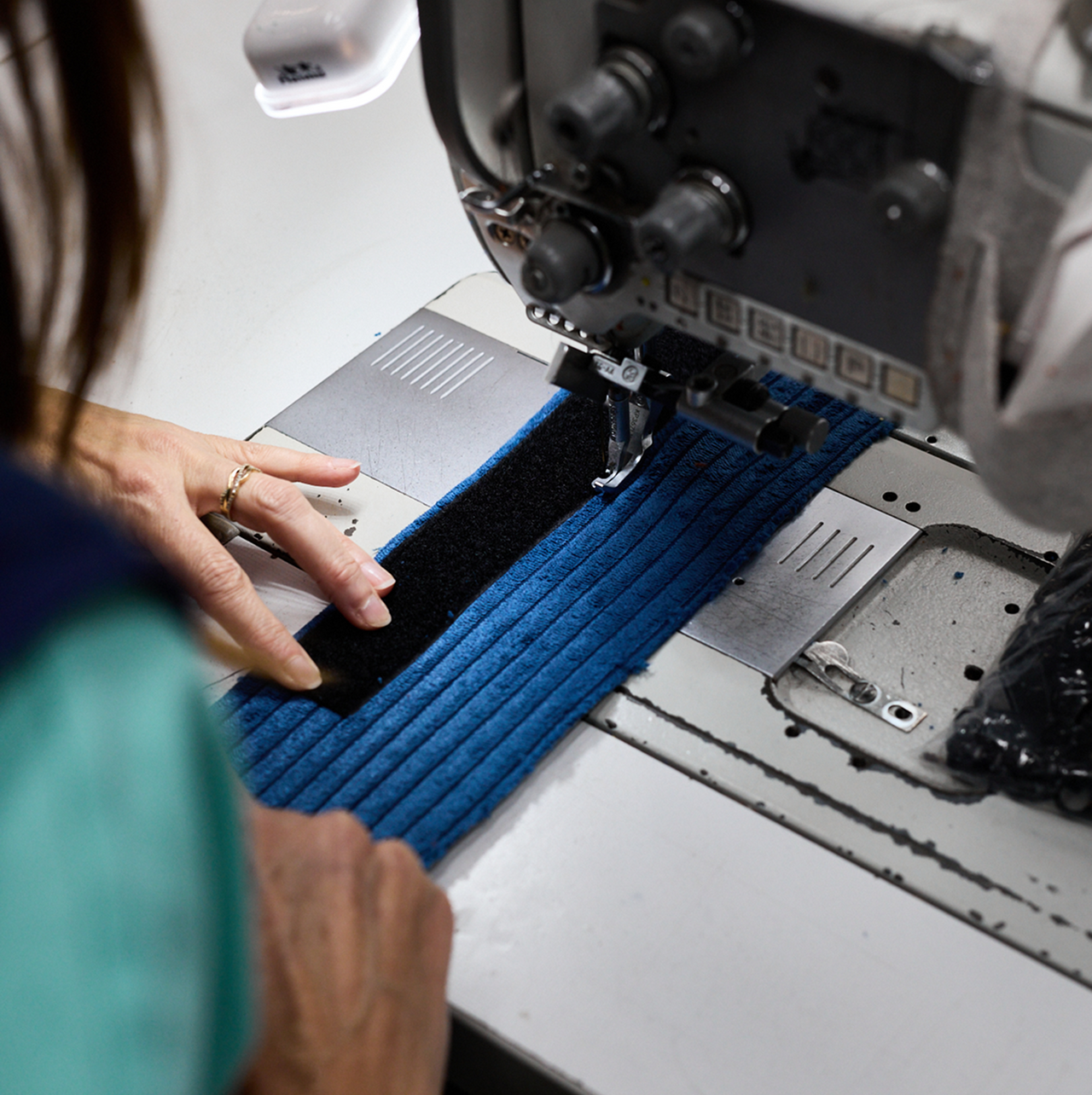
Our TEDDY sofa uses exactly this kind of corduroy: made for furniture, not for trousers. Thicker pile, wider ridges, a blend that survives family life. If you're weighing it up against other options, our guide to fabric material for sofa puts corduroy side by side with the alternatives.
How corduroy is made, step by step
Corduroy is made by weaving in extra yarn that is later cut open. Five steps, no textile engineering degree required:
- Weave the base. A standard woven cloth is made from warp (lengthwise) and weft (crosswise) yarns. This is the backing that holds everything together.
- Add the extra weft. Additional filling yarns are woven so they float loosely over the surface in straight lines instead of being locked into the base.
- Cut the floats. Circular blades slice those floats open down the middle. Each cut float springs up into a tuft of fibres, which is the pile.
- Brush and singe. The fabric is brushed to lift the pile and singed to burn off stray fuzz, so the ridges stand up clean and defined.
- Dye and finish. Colour goes on, then finishing treatments for stain resistance or softness.
The channels between the cut rows are what create the visible stripe. No printing, no embossing. The pattern is structural, which is why it never wears off.
Wale count: fine, standard and jumbo corduroy
Wale count is simply the number of ridges per inch. High number equals fine and delicate. Low number equals wide and chunky.
- Pinwale (16 to 21 wales): thin, almost smooth. Shirts, children's clothes.
- Standard (11 to 14 wales): the trouser classic. Recognisably corduroy without shouting.
- Wide wale (6 to 10 wales): jackets, cushions, upholstery. The ridges read from across a room.
- Jumbo or elephant cord (1.5 to 6 wales): big soft cords, very tactile, very seventies.
For furniture, wide and jumbo win. Fine wale on a large sofa looks like someone upholstered it in a shirt, and the thin pile crushes faster under body weight.
What makes corduroy special
Corduroy is texture doing the job colour usually has to do alone. That's the real reason it works in a living room.
Because the pile stands up in rows, every ridge has a lit side and a shaded side. One colour therefore reads as three or four shades at once, shifting as you move around the room and as the light changes through the day. Our Rust goes from warm terracotta at noon to something close to brick at dusk. Sage looks dusty in daylight and almost grey-green under lamps. Lavender softens. Charcoal picks up a slight sheen along the tops of the wales.
Beyond looks, three practical things:
- It hides mess. Crumbs and pet hair drop into the grooves rather than sitting on top like they do on flat weave. Less visual noise between vacuums.
- It has grip. The pile has a slight drag to it, so you don't slide off mid-film the way you do on tight smooth upholstery.
- It feels warm. Pile traps a thin layer of air, so corduroy never has that cold slap of leather in January.
It also plays well with almost everything else in a room. Wood, wool, metal, plants. Texture is a better neighbour than pattern.
The downsides nobody mentions
Corduroy is not maintenance-free, and anyone who tells you otherwise hasn't lived with it. Four honest drawbacks, each with a fix:
- The pile flattens where you always sit. Over time your favourite spot shades slightly darker or lighter. Fix: brush the pile back along the direction of the wale with a soft clothes brush, and rotate cushions so the wear spreads out.
- It shows brush marks, like velvet. Sit down, get up, leave a handprint of pressed pile. Fix: brush in one direction and it disappears. Some people like the marks. They're proof someone lives there.
- Dust settles in the grooves. The same channels that hide crumbs also collect them. Fix: vacuum along the wales with a soft brush head, not across.
- Cheap corduroy pills. Short loose fibres rub into little balls. Fix: buy upholstery-grade fabric with a proper rub rating, and de-pill with a fabric shaver if it happens.
The best insurance is a cover you can take off. TEDDY's covers unzip and go in the machine, so a bad wine night isn't a sofa-replacement event.
How to care for a corduroy sofa
Corduroy care is mostly about direction: vacuum along the wales, brush along the wales, never scrub across them. Do that and the fabric ages well.
The weekly routine
- Vacuum with a soft brush attachment, following the ridges.
- Give flattened areas a quick brush to lift the pile.
- Fluff and flip loose cushions so no single spot takes all the sitting.
When something spills
- Blot immediately with a clean dry cloth. Press, don't rub. Rubbing tangles the pile and sets the stain.
- Work from the outside of the spill inward so it doesn't spread.
- Let it dry fully, then brush the pile back into line.
Keep the sofa out of direct hard sunlight if you can, since pile fabric fades unevenly and the flattened parts fade faster. For deeper stains and general resets, our guide on how to clean a couch covers the methods that won't wreck a pile fabric.
Corduroy beyond furniture
Corduroy pants are what most people picture first, and wale count decides the garment. Pinwale for shirts, because fine ridges drape and don't add bulk. Standard wale for trousers. Wide wale for jackets and overshirts, where the texture is the whole point.
Yes, corduroy trousers whistle. The ridges on your inner thighs rub against each other as you walk and produce that soft zip-zip sound. It's physics, not a manufacturing flaw, and it's more noticeable on wider wales.
The fabric peaked in the 1970s, spent the 1990s in exile, then came back hard in the 2020s along with everything else brown, textured and slightly nostalgic. Which brings us to the only styling rule that matters: your corduroy trousers and your corduroy sofa should not match. Same fabric family, different colour, no eye contact. Accidental camouflage is funny exactly once.
FAQ
Is corduroy the same as velvet?
No. Both have cut pile, but velvet's pile covers the whole surface while corduroy's is arranged in raised ridges with flat channels between them. Corduroy hides marks better as a result.
Is corduroy warm?
Yes. The pile traps air, which insulates. That's why it's a winter fabric in clothing and why a corduroy sofa never feels cold to sit on.
Does corduroy pill?
Cheap corduroy does, especially in high-friction spots. Upholstery-grade blends with polyester resist it much better, and a fabric shaver removes anything that does appear.
Can you wash corduroy?
Clothing corduroy washes cold and inside out, then air dries. For furniture, only wash covers that are designed to be removed, and always follow the care label. TEDDY's covers are machine washable.
Is corduroy good with pets?
It's one of the better choices. There are no loops to snag on claws, and hair sits in the grooves where a vacuum can lift it out rather than clinging to a flat surface.
Why is it called corduroy?
Not from the French corde du roi (cord of the king). That's a charming story invented later, and French speakers never called the fabric that. The likelier root is duroy, an old English worsted cloth, combined with cord.
Is corduroy in style?
Very much so, in interiors especially. Texture-led furniture has replaced flat minimalism, and corduroy sits right in the middle of that shift.


