


The 11 Best Sofa Fabrics and Materials
Picking a sofa fabric is less about what looks good under gallery lighting and more about what survives Tuesday night with a full glass of red and a dog who thinks the cushions are his. So let's talk about the sofa fabric buyers actually have to live with.
Below are 11 options, each with an honest verdict. No showroom fantasy, just how they feel and how they hold up.
How to Choose a Sofa Fabric
Match the fabric to your real life. A quiet couple with no pets can chase texture. A family with a toddler and a Labrador should chase durability.
Here's the rundown.
- Durability (rub count): Fabrics get tested by rubbing them back and forth until they wear out. That number is the rub count. Anything above 15,000 is fine for a home. Above 25,000 handles daily use and a busy household without blinking.
- How it feels on skin: You sit on this thing barelegged in summer. Some weaves are cool and smooth, others scratch or cling. Touch it before you commit.
- Stain and pet resistance: Tight weaves and synthetics shrug off spills. Loose loops and natural fibers soak them up. If you have kids or animals, this matters more than the color chart.
- Light-fastness: A sofa by a sunny window fades. Some fabrics hold color for years, others go patchy in one summer.
- Cleaning: Some fabrics wipe clean, some need brushing, some need a professional. Know what you're signing up for before the first spill happens.
1. Linen

Linen feels cool and breathable, which is why it's a favorite in warm rooms and relaxed homes. It has that slightly rumpled, lived-in look that some people love on sight.
That same charm is the catch. Linen wrinkles easily and it stains fast because the fibers drink up liquid. It suits adults who genuinely like the crumpled aesthetic and keep the red wine at arm's length.
It does not suit toddlers, muddy paws or anyone who wants a surface that always looks pressed.
Pros |
Cons |
|---|---|
Cool and breathable |
Wrinkles easily |
Relaxed, lived-in look |
Stains fast, fibers soak up liquid |
Suits warm, low-mess rooms |
Poor fit for toddlers or muddy paws |
2. Corduroy

We build our TEDDY sofa in corduroy for a simple reason: it does the most while asking for the least.
It's soft in a way that makes you want to stay, warm without feeling stuffy and it ages into something you like more, not less.
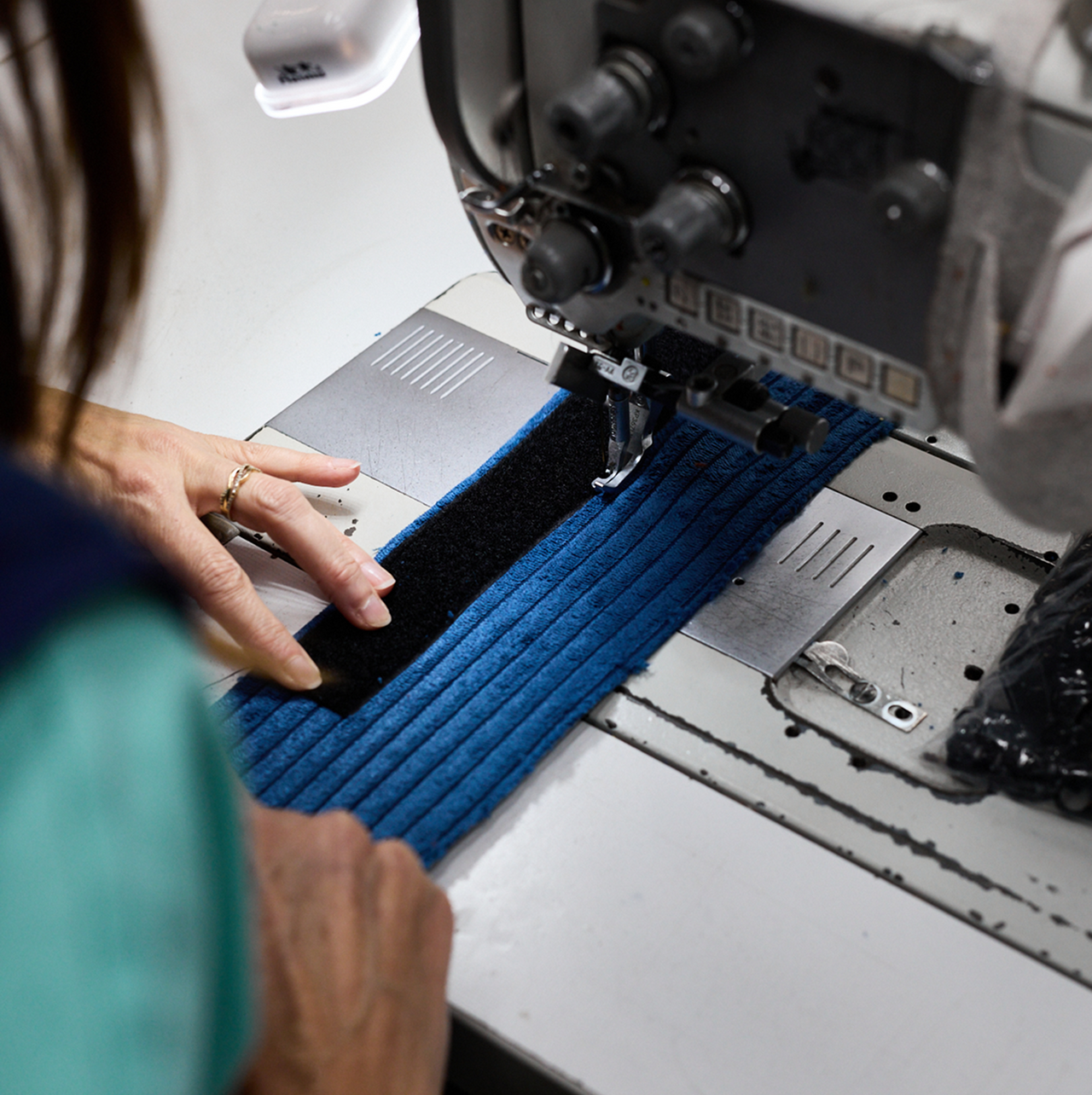
The ridges (called wales) are secretly practical. Crumbs and small mess drop into the grooves instead of sitting on top, so it reads as clean even when life happened on it. And it comes in 21 colors, from Cream White to a deep Moss, so it fits a calm room or a loud one.
The minor downside: in the spots you sit most, the ridges can flatten over time. Good news is it brushes right back with a soft brush or even your hand. A minute of maintenance, not a project.
Pros |
Cons |
|---|---|
Soft and warm without feeling stuffy |
Ridges flatten where you sit most (brush back in a minute) |
Ridges hide crumbs and small mess |
|
Ages well, 21 colors, modular |
3. Cotton

Cotton is the approachable middle ground: soft, breathable and easy on the budget. It comes in every color and pattern you can imagine, so it's flexible.
Untreated, it wears down and stains over time. Blends and stain treatments fix a lot of that.
Think of cotton as a solid pick for a lower-traffic room, a guest space or a formal sitting room that doesn't take daily abuse.
Pros |
Cons |
|---|---|
Soft, breathable, budget-friendly |
Untreated, it wears and stains over time |
Huge range of colors and patterns |
Best kept to low-traffic rooms |
Blends and treatments boost durability |
4. Velvet

Velvet is the show-off. The pile catches light so the color shifts as you move around it, and it feels plush under your hand. For a statement piece, nothing else does what velvet does.
But it marks. Sit down, brush your hand across it, and you leave a trail. It needs regular brushing to keep the pile even and looking right. Velvet rewards a calm household and punishes a chaotic one.
Beautiful, high-maintenance, worth it if you're honest about the upkeep.
Pros |
Cons |
|---|---|
Plush, luxurious feel |
Marks and shows every touch |
Color shifts beautifully in light |
Needs regular brushing |
Strong statement piece |
High-maintenance in a busy home |
5. Wool

Wool is warm, tough and naturally good at resisting stains and wrinkles. It springs back into shape and it lasts for years, which makes it one of the best picks for cold rooms and long-haul use.
Pure wool can feel a little scratchy against bare skin. That's what blends are for: mix it with a softer fiber and you keep the durability while losing the itch. If your living room runs cold and you want something that ages slowly, wool earns its keep.
Pros |
Cons |
|---|---|
Warm and hard-wearing |
Pure wool can feel scratchy (blends fix this) |
Naturally resists stains and wrinkles |
|
Springs back, lasts for years |
6. Polyester and Microfiber

These synthetics are the sensible choice for real family life. They're tough, they resist stains and they cost less than most natural fabrics.
If you have kids and pets, this is the low-drama option.
Microfiber is polyester woven into very fine threads, which makes it soft and very good at repelling spills.
The tradeoff: synthetics can feel less natural to the touch and they trap heat, so they get a bit warm in summer. Still, for sheer practicality they're hard to beat.
If you're interested in learning more about protecting your sofa, we wrote an article on Waterproof Sofa Covers for Pets, which also applies to families with kids.
Pros |
Cons |
|---|---|
Tough and stain-resistant |
Can feel less natural to the touch |
Affordable |
Traps heat, warm in summer |
Low-drama for kids and pets (microfiber repels spills) |
7. Chenille

Chenille has a fuzzy, tufted feel that's genuinely lovely to sink into. It looks cozy and inviting, and softness lovers tend to fall for it fast.
The problem is claws. Chenille is made of little loops, and cats treat loops like a personal invitation. One session with a kitten and you'll see pulls all over it. Great for a home without clawed animals, risky for anyone sharing a couch with a cat.
Pros |
Cons |
|---|---|
Fuzzy, soft, cozy to sink into |
Loops snag and pull easily |
Inviting, tactile look |
Cats shred it fast |
8. Leather

Leather is the material that improves with age. It develops a patina, that soft worn character that new leather doesn't have, and it wipes clean with a damp cloth. Spills sit on top instead of soaking in.
Two terms worth knowing. Full-grain is the top natural layer of the hide, the most durable and the most expensive. Bonded is leather scraps ground up and glued together, cheaper but it cracks and peels much sooner. Buy the best grain you can afford.
The honest notes: leather feels cold in winter and warm and sticky in summer, and it's not cheap. But it lasts decades and looks better every year.
Pros |
Cons |
|---|---|
Ages into a patina, looks better over time |
Cold in winter, sticky in summer |
Wipes clean, spills sit on top |
Expensive |
Lasts decades (buy full-grain) |
Bonded leather cracks and peels |
We wrote an opinion piece on why fabrics beat leather, read it here: Leather vs fabric sofas.
9. Faux leather

Gives you the leather look for less money and it wipes clean easily. The catch is breathability: it doesn't let air move the way real hide does, so it can feel sweaty in summer, and cheaper versions crack over time. Verdict: fine for the look and the budget, don't expect it to age like the real thing.
Pros |
Cons |
|---|---|
Leather look for less money |
Not breathable, sweaty in summer |
Wipes clean easily |
Cheaper versions crack over time |
10. Bouclé

The loopy, nubbly texture that's everywhere right now. It's soft and it adds real texture to a room. But those loops snag on jewelry, zippers and especially pet claws. It's trendy and tactile, but you have to treat it gently.
Pros |
Cons |
|---|---|
Soft, adds real texture |
Loops snag on jewelry and zippers |
On-trend look |
Pet claws pull it apart |
11. Treated fabrics

These are woven or treated specifically to fight spills, stains and pet chaos. Liquids bead up and wipe away, and colors hold against sun and scrubbing. Verdict: the smartest choice if you want a natural-ish look with synthetic-level toughness.
Pros |
Cons |
|---|---|
Liquids bead up and wipe away |
Costs more than untreated versions |
Holds color against sun and scrubbing |
|
Natural-ish look, synthetic-level toughness |
Which Fabric Wins for Your Home
Quick answers by scenario, because the best material for sofa fabric depends entirely on who's using it.
- Pets: Polyester, microfiber, leather or a performance fabric. Skip loops (chenille, bouclé). Our full guide to sofa material for pets goes deeper.
- Kids: Microfiber, treated cotton or performance fabric. You want wipe-clean and forgiving.
- Allergy sufferers: Leather or tightly woven synthetics. Fewer fibers to trap dust and dander.
- Cold rooms: Wool or a wool blend, or soft corduroy. Warmth you can feel.
- Statement lovers: Velvet or full-grain leather. Drama that earns its spot.
- Low budget: Cotton, polyester or faux leather. Solid looks without the sting.
If you want the balance of soft and forgiving, that's where TEDDY's corduroy lands. Soft enough to live in, ridged enough to hide the daily mess, and available in 21 colors. It also comes modular (TEDDY Sofa, Plus, Corner Open and Corner Closed) so you can build it around your room instead of squeezing your room around it. If you're tight on space, our notes on comfy sofas for small spaces and l shaped sofas for small spaces are a good next stop.
FAQ
What's the most durable sofa fabric?
Leather and high-rub-count synthetics like microfiber lead the pack. Full-grain leather lasts decades, and microfiber handles daily family use while resisting stains. For natural fibers, wool is the toughest of the bunch.
What's the best fabric for pets?
Microfiber, tightly woven polyester and leather. They resist claws, wipe clean and don't snag. Avoid loop-based fabrics like chenille and bouclé, which pull the moment a cat gets bored.
What's the best fabric for allergies?
Leather or a smooth, tightly woven synthetic. Both trap far less dust and pet dander than fuzzy or looped fabrics, and they wipe down in seconds.
How often should I clean my sofa?
A quick vacuum weekly and a proper spot-clean whenever something spills. Deeper cleaning once or twice a year keeps most fabrics fresh. See our guide on how to clean a couch and the steps for how to clean a sofa cushion.
Is corduroy good for a sofa?
Yes. It's soft, warm and the ridges hide crumbs and small mess. The pile can flatten where you sit most, but a soft brush restores it in under a minute. It's one of the more forgiving fabrics you can put in a living room.


